Read-End Accident Lawyer in Palm Beach Gardens, FL
Rear-ended and injured in Palm Beach Gardens? Get an attorney who gets results
Rear-end accidents in Palm Beach Gardens are unfortunately all too common, often resulting in significant injuries and complicated insurance claims. If you've been injured in a rear-end collision, you may be facing mounting medical bills, lost wages, and other expenses. At The Law Offices of Casey D. Shomo, P.A. in Palm Beach Gardens, Mr. Shomo is an experienced rear-end accident lawyer who understands the challenges you're facing—and he is here to help.
“Casey & Joanne were a great help throughout my first car accident. They jumped into action right away, and I’m very fortunate to have them by my side. Thank you again! Definitely recommend!” - Cory M.
Mr. Shomo can assist you in navigating the complexities of your rear-end accident case. Whether you need help dealing with insurance companies, gathering evidence, or negotiating a fair settlement, Mr. Shomo will protect your rights and pursue the compensation you deserve for your injuries and losses.
Don't face the aftermath of a rear-end accident alone. Contact The Law Offices of Casey D. Shomo, P.A. today to schedule a free consultation and learn how our law firm can help you seek justice and financial recovery.
“Casey & Joanne were a great help throughout my first car accident. They jumped into action right away, and I’m very fortunate to have them by my side. Thank you again! Definitely recommend!” - Cory M., ⭐⭐⭐⭐⭐
Average Google Rating: 5/5 stars, 45 reviews
Florida Rear-End Accident FAQs
- What is a rear-end accident?
- Why do rear-end accidents happen?
- Who is at fault for a rear-end accident?
- What are common rear-end accident injuries in Palm Beach Gardens?
- What are the most common locations for rear-end accidents in Palm Beach Gardens?
- How does Florida’s no-fault insurance affect rear-end crash claims?
- Can I still recover compensation if I was partially at fault in a rear-end accident in Florida?
- What steps should I take immediately after a rear-end accident on roads like I-95 or Okeechobee Boulevard?
- Are rear-end collisions treated differently if they involve commercial vehicles or delivery trucks in Palm Beach Gardens?
- How can a Palm Beach Gardens car accident lawyer help strengthen a rear-end accident claim?
What is a rear-end accident?
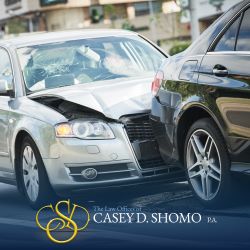
A rear-end crash is a type of car accident that happens when one vehicle collides with the backside of another. This collision might lack the forceful impact of a head-on crash but can still cause severe injury. With the potential for serious injuries, these accidents often occur in scenarios such as bumper-to-bumper traffic, unexpected stops at red lights, or when a trailing driver fails to maintain a safe following distance.
Why do rear-end accidents happen?
When drivers aren’t paying attention to the road or get behind the wheel and choose to drive negligently, they put every other road user at risk. Some of the most common causes of rear-end accidents include:
- Texting and driving: When a driver makes the decision to text and drive, their attention is diverted from the road. This distraction can lead to delayed reaction times and an inability to notice changes in traffic flow. The driver may not see a vehicle slowing down or stopping in front of them, causing them to collide with the back of another vehicle.
- Drowsy driving: Fatigue impairs a driver's ability to focus and react quickly. A drowsy driver may have difficulty staying alert, maintaining a consistent speed, or recognizing when the vehicle in front is slowing down. These factors contribute to the risk of rear-end accidents as the tired driver may not brake in time to avoid a collision.
- Speeding: Exceeding the speed limit makes a vehicle more difficult to control. When traveling at high speeds, a driver may struggle to stop quickly enough if the vehicle in front slows down or comes to a stop. Even if they do react on time, at such high speeds the vehicle may not be able to stop in time, leading to rear-end accidents.
- Drunk driving: Alcohol impairs a driver's coordination, reaction time, and judgment. Intoxicated drivers may struggle to maintain the distance between their vehicle and the one in front, leading to a higher likelihood of rear-end accidents.
Tailgating, the practice of closely following the vehicle in front, poses a significant risk for rear-end accidents. This behavior, often fueled by impatience or general recklessness, lessens the space there should be between vehicles. With less space there’s less time for reaction. Tailgating reduces a driver's ability to respond quickly to sudden changes in traffic conditions.
Who is at fault for a rear-end accident?
Determining fault in a rear-end accident may seem straightforward in most cases, as the driver who rear-ends another vehicle is typically held responsible. This is rooted in the general expectation that drivers should maintain a safe following distance and be prepared to stop or slow down as needed.
However, there are instances where the front driver may share some responsibility or even be solely at fault. In rare and complex situations, factors such as sudden and unexpected stops, abrupt lane changes, or malfunctioning brake lights can complicate the assessment of fault. The front driver might engage in behaviors that contribute to the collision, challenging the assumption that the rear driver is automatically at fault.
What are common rear-end accident injuries in Palm Beach Gardens?
Rear-end accidents can lead to a range of injuries, often causing significant pain and discomfort. Here are some common injuries associated with these types of collisions:
- Whiplash: Whiplash occurs when the head and neck are suddenly jerked forward and then snapped back, causing strain on the neck muscles and ligaments. This is among the most common types of injuries sustained in rear-end accidents.
- Spinal cord injuries: The impact of a rear-end collision can cause damage to the spinal cord, leading to various degrees of paralysis or loss of sensation.
- Head, neck, and back injuries: Rear-end accidents can result in trauma to the head, neck, and back, including fractures, herniated discs, and nerve damage.
- Concussions: A concussion is a mild traumatic brain injury that can occur when the head is jolted during a rear-end collision, leading to symptoms such as headaches, dizziness, and cognitive difficulties.
- Soft tissue injuries: These injuries involve damage to muscles, tendons, and ligaments and can cause pain, swelling, and limited mobility.
It's important to seek immediate medical attention after a rear-end accident, even if you don't immediately feel injured. Some injuries may not manifest symptoms right away, and early intervention can prevent complications down the line.
Additionally, documenting your injuries through medical records is crucial for insurance claims or potential legal action. Your health and well-being should always be the top priority after a rear-end collision.
What are the most common locations for rear-end accidents in Palm Beach Gardens?
Rear-end collisions tend to happen in areas with high traffic volume, stop-and-go patterns, or sudden speed changes. In Palm Beach Gardens, several corridors and intersections have consistently seen more frequent crash activity, especially during rush hours or tourist season. Knowing where rear-end accidents often occur can help illustrate how and why a crash happened, and whether another driver may have been clearly at fault. Frequent rear-end crash hotspots in Palm Beach Gardens and surrounding areas include:
- I-95 and Southern Boulevard: A high-speed zone with aggressive merging and frequent congestion, especially during weekday commutes.
- Okeechobee Boulevard near I-95 and downtown West Palm Beach: Heavy traffic, numerous intersections, and lane changes make this a prime area for stop-and-go collisions.
- US-1 (Federal Highway): Rear-end accidents are common here due to frequent stoplights, commercial driveways, and pedestrian crossings.
- Military Trail and Forest Hill Boulevard: Busy local arteries with dense commercial zones, which create abrupt stops and short braking distances.
- Palm Beach Lakes Boulevard near the outlet mall: Shoppers, tourists, and sudden turns all contribute to rear-end crash risks.
- Glades Road near I-95 in Boca Raton: Especially during FAU events or peak retail hours, this area sees slowdowns that can lead to rear-end impacts.
Accidents in these areas often involve distracted drivers, unsafe following distances, or abrupt lane changes. If you were hit in one of these common zones, a lawyer may be able to help show how location patterns, traffic data, and crash history support your claim, and push back when insurers try to shift the blame.
How does Florida’s no-fault insurance affect rear-end crash claims?
After a rear-end crash in Florida, injured drivers must first turn to their own Personal Injury Protection coverage, regardless of who caused the accident. This coverage is limited and often exhausted quickly in rear-end collisions on roads like I-95, US‑1, or Okeechobee Boulevard, where whiplash, back injuries, and concussions are common. Once injuries meet Florida’s serious injury threshold, victims may pursue compensation from the at‑fault driver. A lawyer can determine when a rear-end claim moves beyond no-fault and how to recover damages that PIP does not cover.
Can I still recover compensation if I was partially at fault in a rear-end accident in Florida?
Yes. Florida follows a modified comparative fault system, which means you may still recover compensation as long as you were not more than 50 percent at fault. Insurance companies often argue that the front driver stopped suddenly or was distracted, especially in congested areas like Military Trail or Palm Beach Lakes Boulevard. These arguments can reduce payouts if left unchallenged. A lawyer can gather evidence such as traffic data, vehicle damage, and witness statements to push back against unfair fault claims.
What steps should I take immediately after a rear-end accident on roads like I-95 or Okeechobee Boulevard?
Rear-end accidents can be disorienting, especially when they happen in fast-moving traffic or chaotic intersections. The steps you take in the moments after a crash can directly affect your safety, your health, and your ability to recover compensation. Whether you are struck on I-95 or a local road like Okeechobee Boulevard, your response matters. Important steps to take immediately after a rear-end crash include:
- Move to a safe location: If possible, move your vehicle to the shoulder or a parking lot to avoid secondary collisions. Use hazard lights to alert other drivers.
- Call 911 and report the crash: Florida law requires you to report crashes that involve injury or significant property damage. A police report will also serve as a key piece of evidence in your claim.
- Document the scene: Take photos of vehicle damage, license plates, traffic signs, and skid marks. If possible, note the time, weather, and traffic conditions.
- Exchange information: Get the other driver’s name, contact information, insurance details, and vehicle information. If witnesses are present, get their contact information too.
- Seek immediate medical attention: Even if you feel okay, get checked out. Rear-end crashes often cause soft tissue injuries, whiplash, or concussions that are not immediately obvious.
- Notify your insurance company, carefully: Stick to the facts and avoid making statements that could be interpreted as admitting fault. Better yet, speak to an attorney before engaging with adjusters.
A lawyer can help ensure that the documentation, medical evidence, and insurance notifications all support your case from the beginning, and that no misstep early on costs you later.
Are rear-end collisions treated differently if they involve commercial vehicles or delivery trucks in Palm Beach Gardens?
Yes. Rear-end crashes involving delivery vans, box trucks, or other commercial vehicles often involve additional layers of liability. In Palm Beach Gardens, these accidents are common near distribution corridors and busy commercial zones, including areas around I‑95 exits and industrial sections of West Palm Beach. The employer, vehicle owner, or maintenance company may share responsibility for the crash. A lawyer can identify all liable parties and pursue compensation beyond what a single driver’s insurance policy may provide.
How can a Palm Beach Gardens car accident lawyer help strengthen a rear-end accident claim?
Rear-end accidents might seem straightforward, but insurance companies often dispute the extent of injuries or try to blame the person in front for “sudden braking.” A lawyer’s job is to make sure your side of the story is backed by facts, medical proof, and legal strength.
Here is how a car accident attorney can help strengthen your claim:
- Preserving and organizing key evidence: This includes crash reports, medical records, traffic camera footage, vehicle damage photos, and accident scene reconstructions.
- Dealing with insurance companies: Lawyers know the language insurers use to minimize payouts. They will negotiate on your behalf and prevent you from falling into common traps.
- Proving fault in complicated cases: Even in rear-end collisions, the at-fault driver’s insurer may claim you stopped too suddenly. A lawyer can use traffic data, witness statements, and expert analysis to fight back.
- Calculating full damages: From ER bills to long-term treatment and lost wages, attorneys assess the true cost of your injuries – and do not accept lowball offers.
- Pushing for full and fair compensation: If the insurance company will not budge, an experienced lawyer can take the case to court and present a strong argument to a judge or jury.
Especially in Palm Beach Gardens, where traffic congestion and insurance disputes are common, having a skilled attorney can make the difference between a rushed settlement and a full financial recovery. You do not have to fight the system alone. Legal support helps tip the balance in your favor.
Get help from a trusted rear-end accident attorney in Florida
Claims involving rear-end accidents can be complex because insurance companies often use various tactics to downplay or deny such claims. While fault may not necessarily be disputed in a rear-end accident case, insurance companies may still try to minimize the extent of your injuries or the compensation you deserve. They may argue that your injuries were pre-existing or not caused by the accident, or they may offer a low settlement amount that doesn't adequately cover your medical expenses, lost wages, and pain and suffering.
Navigating these challenges on your own can be overwhelming, which is why it's essential to seek legal representation from an experienced rear-end accident attorney like Mr. Shomo. With his knowledge of personal injury law and reputation for achieving stellar case results, Mr. Shomo and his dedicated legal team can protect your rights and work to secure the full and fair compensation you deserve. Don't let insurance companies take advantage of you – let our law firm fight for the justice you deserve after a rear-end accident. Schedule a free consultation today to learn more.